
Evergreen shows no sign of wilting
It is 40 years since the iconic film musical of Little Shop of Horrors was released, with Ellen Greene reprising her Broadway and West End performances in the stage show which preceded it.
But it is a musical I have loved for four decades – which makes any new production a tough watch. Will it live up to expectation under the direction of Sarah Brigham?
Can it be fresh without too much departure from the story? Will it have an approach that’s close enough to the original to be interesting, without being a carbon copy? And as with all good theatre, could it elicit a sense that this is happening for the first time – tricky when as an audience member you can anticipate every lyric, comedic line, musical intro.
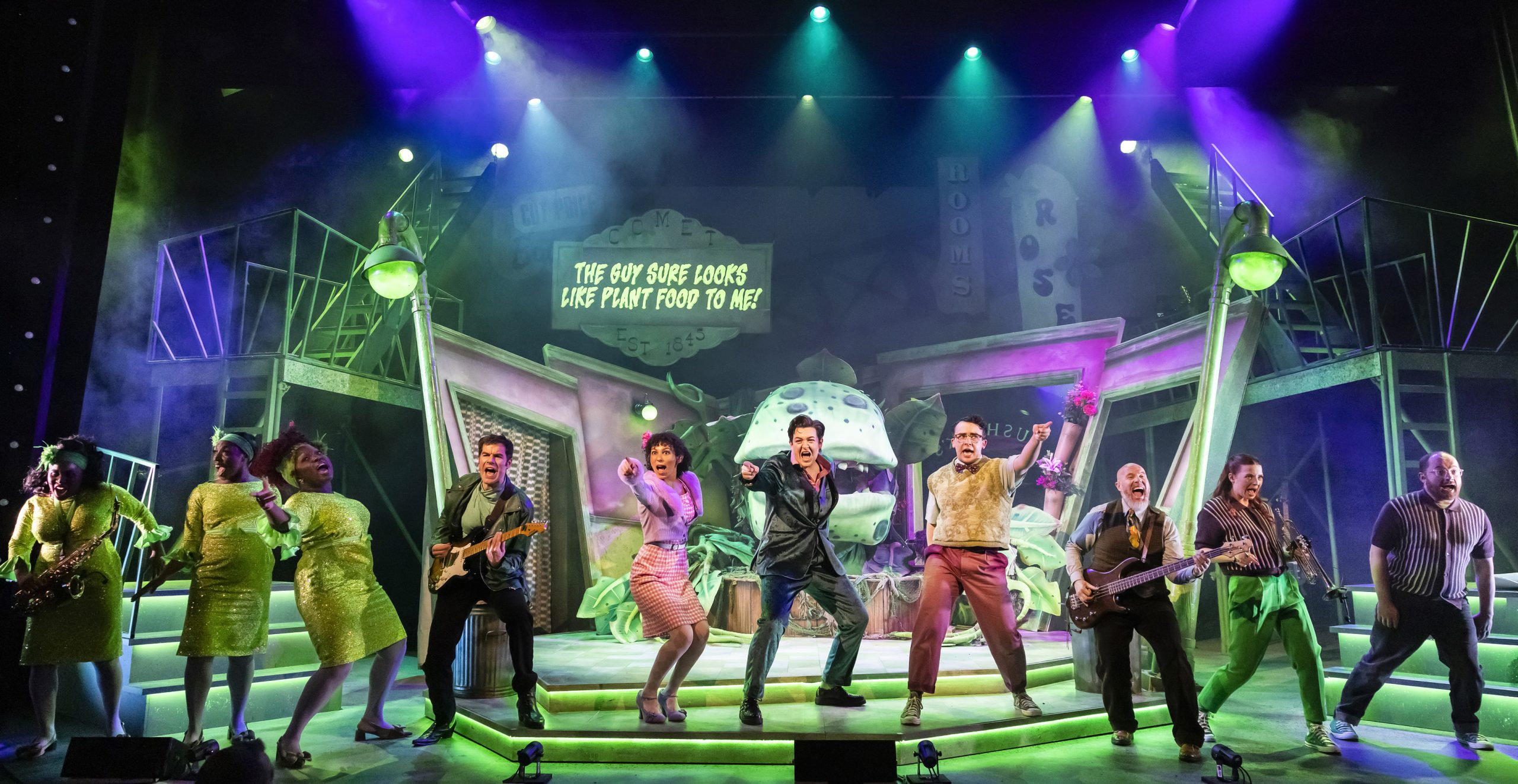
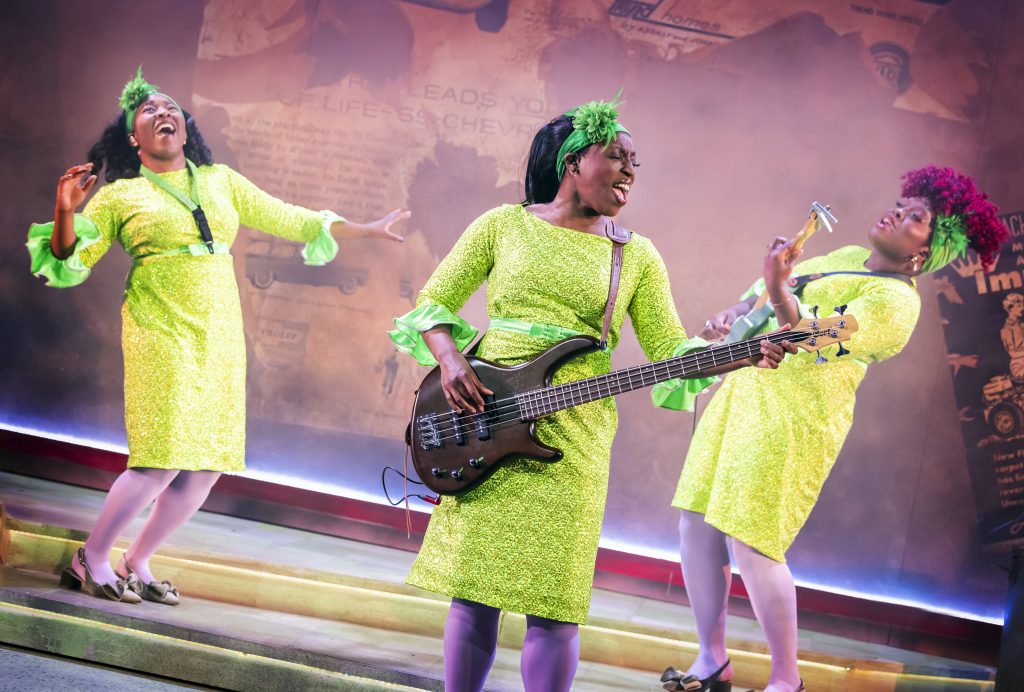
So it’s a huge congratulations to the teams at Derby Theatre and Northern Stage for cultivating its offshoot, helping this occasionally jaded and super-critical critic for being able to suddenly see more in LSOH. And I mean that literally – with dialogue and lyrics screened onto the back wall in retro comic style, you can’t miss a word (although the “please don’t sing along” announcement was mood-dampening, albeit necessary). It’s also a musician-actor show, with most of the cast stepping up to show off their musical prowess, and kudos to the “greek chorus” Phil Spectre-style trio, who play guitars or sax throughout, as well as top-notch three-part harmonies and some seriously sassy moves, a combination that The Ronettes/Chiffons/Supremes never managed!
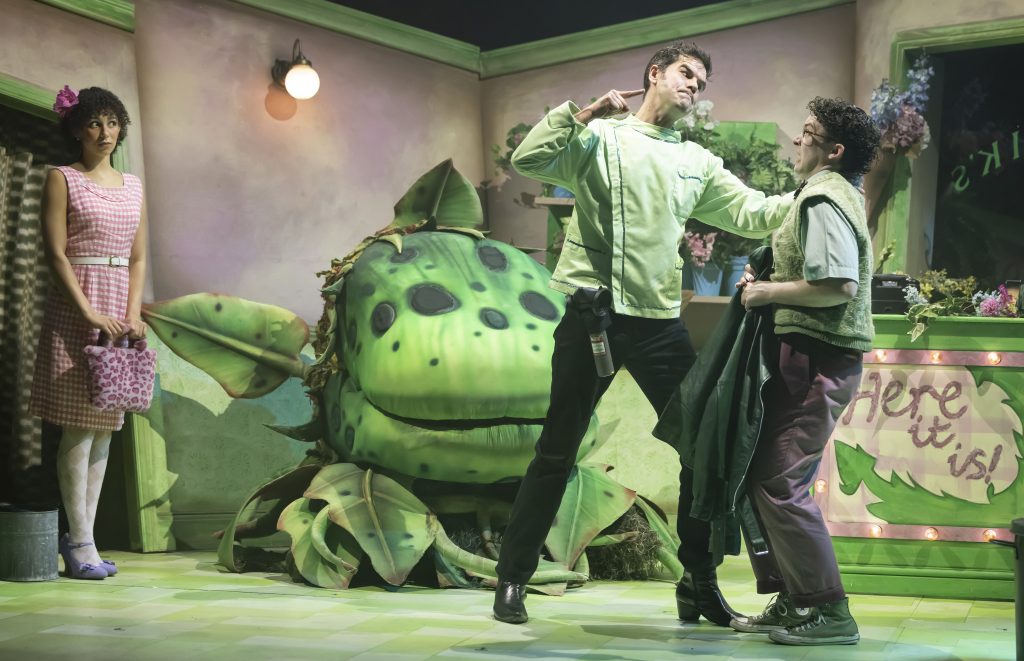
A large part of the freshness though is because of Kristian Cunningham’s honest, vulnerable, and loveable Seymour. He avoids the temptation to play it for geek comedy, but instead seeds innocence and conviction to the character, as he battles his conflict of desire for the temptations offered by Audrey II (wonderfully moved by Ross Lennon and voiced with envy-inducing, powerhouse lungs, courtesy of Tasha Dowd).
Amena Elk-Kindy’s Audrey may not have Greene’s wide-eyed fragility, but she does have a huge voice, although her ability to switch switches appealing to overpowering in a nanosecond, leaves little room for the journey of the in-between.
And David Rankine provides heightened (high-tened?) badness as Orin the Dentist, as well as a series of comedic cameos, luring Seymour to sign lucrative deals throughout “The Meek Shall Inherit”. Howard Ashman and Alan Menken’s doo-wop/rock n roll lyrics and music stand the test of time, leading to a singalong finale which had the press night audience on their feet.
Whether the deeper warning about impoverished communities, dying under the machines of commercialism and capitalism, lands with the audience, I’m not entirely convinced. But as a crack(pot) piece of musical theatre, it is well-rooted and will undoubtedly continue to flourish.